


Quick Answer
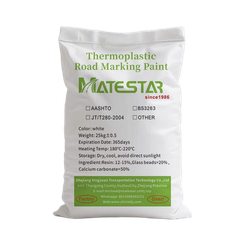
For highways, urban arterial roads, intersections, and other high-traffic areas, thermoplastic road marking paint is generally the best choice because it provides excellent wear resistance, fast drying, high retroreflectivity, and a long service life. However, the best material also depends on traffic volume, pavement type, climate, maintenance cycle, and project budget.
What Is Considered a High Traffic Area?
Typical high-traffic areas include:
- Highways
- Expressways
- Urban arterial roads
- Intersections
- Toll plazas
- Bus lanes
- Logistics parks
- Industrial roads
- Airport roads
These locations experience constant vehicle loading, braking, and turning, requiring pavement markings with higher durability than ordinary road paint.

What Makes a Road Marking Paint Suitable for Heavy Traffic?
When selecting a pavement marking material, focus on these six factors instead of price alone.
| Factor | Why It Matters |
|---|---|
| Wear resistance | Resists continuous tire abrasion |
| Adhesion | Prevents peeling from asphalt or concrete |
| Drying time | Reduces lane closure time |
| Retroreflectivity | Improves nighttime visibility |
| Heat resistance | Maintains shape in hot climates |
| Service life | Reduces maintenance frequency |
Comparison of Common Road Marking Paints
| Material | Durability | Heavy Traffic | Typical Service Life | Recommended Use |
|---|---|---|---|---|
| Thermoplastic | ★★★★★ | Excellent | 2–5 years | Highways, arterial roads |
| MMA | ★★★★★ | Excellent | 4–8 years | Airports, bridges, heavy-duty areas |
| Epoxy | ★★★★☆ | Good | 2–4 years | Concrete pavement |
| Water-Based Paint | ★★☆☆☆ | Fair | 6–18 months | Urban streets, parking lots |
| Solvent-Based Paint | ★☆☆☆☆ | Poor | 6–12 months | Temporary markings |
Traffic volume, pavement type, and expected maintenance interval should determine the material-not simply the initial cost.
Why Thermoplastic Paint Is the Preferred Choice for High-Traffic Roads
Excellent Wear Resistance
Thermoplastic forms a thick layer, typically 1.5–3.0 mm, making it far more resistant to tire wear than conventional traffic paint.
Fast Opening to Traffic
After cooling, thermoplastic hardens within a few minutes, minimizing traffic disruption and reducing construction time.
Long Service Life
Because of its high wear resistance and thick film build, thermoplastic usually requires fewer repainting cycles, lowering life-cycle costs.
High Nighttime Visibility
Drop-on glass beads become mechanically embedded in the molten thermoplastic, providing long-lasting retroreflectivity.
Suitable for Asphalt and Concrete
With proper surface preparation and primer when required, thermoplastic performs well on both asphalt and concrete pavements.
When Thermoplastic May Not Be the Best Choice
Thermoplastic is not always the right solution.
Other materials may be more suitable when:
- Temporary road markings are required.
- The project budget is very limited.
- Traffic volume is low.
- Frequent layout changes are expected.
- Indoor facilities require cold-applied materials.
Selecting the right material should always balance performance, maintenance requirements, and total life-cycle cost rather than focusing only on the purchase price.
How to Choose the Right Road Marking Paint
Before selecting a material, confirm:
- Traffic volume
- Pavement type (asphalt or concrete)
- Climate
- Required service life
- Required retroreflectivity
- Available maintenance budget
- Local specification or standard
These factors will determine whether thermoplastic, MMA, epoxy, or conventional traffic paint provides the best overall value.
Frequently Asked Questions
Is thermoplastic paint better than traffic paint?
For high-traffic roads, yes. Thermoplastic offers greater durability, faster return to service, and longer maintenance intervals.
What is the longest-lasting road marking material?
MMA and thermoplastic generally provide the longest service life, although the best choice depends on traffic conditions and pavement type.
Can thermoplastic be used on concrete?
Yes. Proper surface preparation and primer are recommended to achieve good adhesion.
Which road marking paint is best for highways?
Thermoplastic is the most commonly specified material for highways because it combines durability, retroreflectivity, and rapid opening to traffic.


