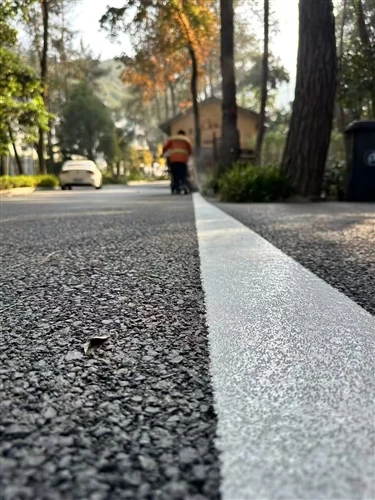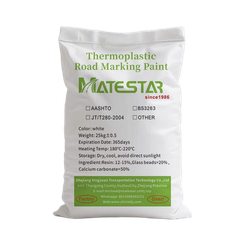
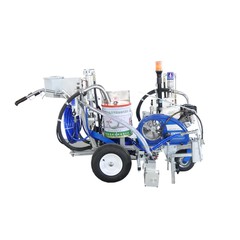
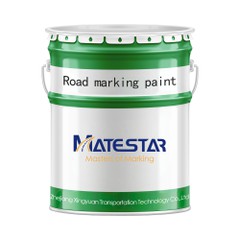
Different road pavement materials, climatic conditions and traffic flow put forward completely different performance requirements for road marking paint. Scientific and reasonable paint selection is the premise to ensure stable marking performance, strong adhesion and long service life, and avoid common problems such as falling off, blistering, cracking and fading in the later stage.
In terms of pavement substrate adaptation, asphalt pavements are soft and have certain thermal expansion and contraction characteristics, which are suitable for flexible and high-adhesion thermoplastic paint and luminous functional marking paint. Such materials can follow the slight deformation of asphalt roads without cracking and peeling. Cement pavements are rigid, flat and low in deformation, making them compatible with high-hardness, weather-resistant marking coatings that deliver strong surface bonding and anti-scouring performance. For rough old pavements and worn road surfaces, high-filling and high-toughness marking paint is recommended to cover tiny cracks and uneven textures, ensuring flat and complete marking lines.
In addition, climatic conditions are key selection criteria. For high-temperature and strong sunlight areas, heat-resistant and anti-fading marking paint is preferred to resist long-term UV radiation and thermal aging. For rainy, humid and frosty regions, waterproof, anti-peeling and low-temperature resistant coatings can effectively avoid blistering, delamination and brittle cracking. Meanwhile, according to traffic volume classification, heavy-duty road sections require high-wear thick-layer marking materials, while suburban roads and low-traffic lanes can adopt cost-effective conventional marking paints. Reasonable matching of paint types and actual pavement environments is the key to maximizing marking quality and service life.