

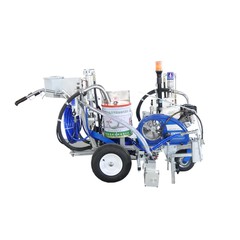
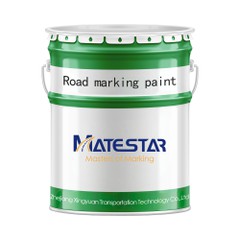
You see road markings every day, but have you ever wondered what they're made of? Pavement marking paints fall into four main categories, each with distinct properties and best-use scenarios.
1. Thermoplastic Markings (Most Common)
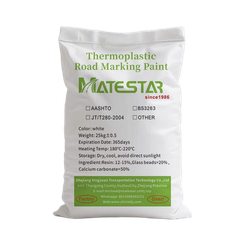
This material is heated until molten before application. Upon cooling, it hardens rapidly into a thick, highly durable and wear-resistant layer. With excellent cost-effectiveness, thermoplastic is the workhorse for highways and urban arterials where heavy traffic demands longevity.

2. Water-Based Paint
Using water as the solvent, this option is environmentally friendly and low-odor. It is the preferred choice for residential zones, school perimeters, and parks where air quality matters. While its abrasion resistance is slightly lower than thermoplastic, its ease of cleanup and reduced VOC emissions are major advantages.

3. Solvent-Based Paint
Once the industry standard, this paint dries via solvent evaporation. It is simple to apply but releases volatile organic compounds (VOCs) during curing. Due to stricter environmental regulations, its use is declining and largely limited to temporary markings or low-traffic secondary roads.

4. Two-Component Markings
This advanced system consists of a base and a hardener that chemically cure upon mixing. The result is an exceptionally strong bond with the pavement, offering superior anti-soiling properties and extreme durability. It is the go-to solution for high-stress areas like intersections, toll plazas, and heavy-load corridors where re-striping is difficult.

Choosing the right paint ensures both road safety and optimal budget efficiency.


