
Vietnam's road marking industry already has an established network of material importers, local distributors and specialized contractors. For businesses operating in this market, purchasing thermoplastic road marking paint is closely connected to product specifications, application performance and reliable supply.
Importers need materials that fit their existing product ranges and customers' expectations. Road marking contractors, meanwhile, must consider project standards, equipment compatibility, material consumption and construction schedules.
These practical requirements are also shaping MATESTAR's ongoing discussions with prospective buyers in Vietnam, including technical specifications and sample evaluation.
Rather than selecting materials based on price alone, the conversations focus on how different thermoplastic formulations can meet actual purchasing and application requirements.
Vietnam's Road Marking Market: Construction Demand and Established Supply Channels
Vietnam's expanding transport network continues to create work for road construction and maintenance companies.
According to the Vietnamese Ministry of Construction, by the end of 2025, the country had completed or technically opened 3,345 km of main expressway routes, alongside 458 km of interchanges and connecting roads.
Beyond new expressways, existing highways, urban roads, industrial zones and logistics facilities also require pavement marking and maintenance services.
However, Vietnam is not a market without established suppliers.
Local companies already manufacture, distribute and apply road marking materials. Imported thermoplastic products are also present in the market, supplying businesses with different purchasing and technical requirements.
For experienced buyers, this means that evaluating a manufacturer involves comparing its products with materials already available locally-not simply discovering a new source of road marking paint.
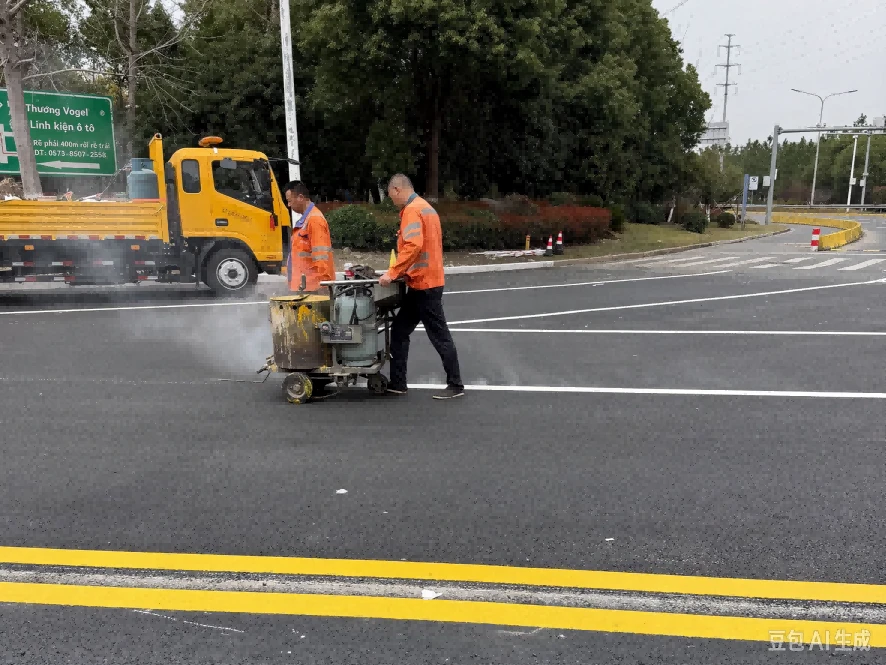
Importers, Distributors and Contractors: Different Roles in the Same Market
Two important groups in Vietnam's road marking material supply chain are established importers and specialized road marking contractors.
Importers and distributors may purchase finished thermoplastic materials from overseas manufacturers and supply them to local contractors, project suppliers and other businesses.
Their priorities often include competitive purchasing costs, consistent product specifications, suitable packaging and reliable repeat supply.
Some distributors may also be interested in developing their own product brands or expanding the range of materials they offer.
Large contractors and specialized road marking companies, on the other hand, may purchase materials for specific construction contracts or maintain their own supply arrangements.
For these buyers, material selection is closely connected to the project specification and the equipment already used by their construction teams.
The distinction matters because the same thermoplastic paint may be evaluated differently by these two groups.
An importer may compare formulations based on price, specifications and resale requirements, while a contractor will also consider melting behaviour, application speed, finished marking appearance and material consumption.
For both groups, consistency between batches remains important, particularly when the same material is purchased repeatedly.
TCVN 8791:2011: A Key Reference for Thermoplastic Paint Evaluation
Vietnam has its own national standard for reflective thermoplastic road marking materials.
TCVN 8791:2011, published by the Vietnam Standards and Quality Institute, covers technical specifications, test methods, construction and acceptance requirements for thermoplastic road marking materials.
The standard is particularly relevant when evaluating products intended for projects that specify it.
It addresses material composition and performance, while also considering how the marking is applied and accepted after construction.
For importers comparing materials from different manufacturers, the standard provides an important technical reference.
Key parameters to review include:
|
Material Parameter |
Purchasing Consideration |
|
Binder and glass bead content |
Whether the formulation matches the required material composition |
|
Luminance and colour |
Daytime visibility and marking appearance |
|
Softening point and heat resistance |
Thermal behaviour during service |
|
Abrasion resistance |
Resistance to marking wear |
|
Density |
Material consumption and coverage |
|
Application requirements |
Compatibility with construction methods and project specifications |
Materials manufactured according to Chinese JT/T standards or international AASHTO specifications should not automatically be assumed to meet every requirement of TCVN 8791:2011.
The actual formulations and test results must be compared with the applicable Vietnamese requirements.
This is one of the technical subjects involved in MATESTAR's recent discussions with Vietnamese buyers.
As a thermoplastic road marking paint manufacturer, MATESTAR can discuss formulations based on the technical requirements of different markets, including glass bead content, luminance factor and application characteristics.
For buyers already familiar with Vietnamese specifications, the important step is to compare the required values with the proposed product-not simply accept a statement that the paint meets an international standard.

From Technical Discussions to Sample Evaluation
MATESTAR is currently communicating with prospective Vietnamese buyers regarding thermoplastic road marking materials and product specifications.
These discussions include material requirements, formulation options and sample arrangements for further evaluation.
For an established importer or contractor, sample evaluation is a practical part of comparing a new manufacturer's products with materials already familiar to the local market.
A technical data sheet provides the starting specifications, but actual testing can offer additional information about application behaviour.
For thermoplastic materials, the evaluation may consider heating characteristics, flowability, colour, surface finish and compatibility with the intended application method.
A product that performs satisfactorily in one marking system may require adjustments for another.
This is particularly relevant for contractors using screed, extrusion or spray application equipment, as the different methods place different requirements on the material.
The purpose of the ongoing technical communication is to identify suitable product options for evaluation before any broader purchasing decision.
Customer identities and commercial arrangements remain confidential.
More Than Price per Ton: What Matters in Bulk Purchasing?
For Vietnamese importers purchasing finished thermoplastic paint, factory price is an important commercial factor. However, comparing different products on price alone may overlook differences in formulation and actual material consumption.
Thermoplastic road marking paint contains resin, pigments, mineral fillers, reflective glass beads and other additives.
The proportions and properties of these materials influence both product cost and application performance.
For example, two white thermoplastic formulations may have different luminance factors because of differences in titanium dioxide content and other ingredients.
Their density and coverage may also differ.
The practical purchasing comparison should therefore consider:
- Price for the confirmed formulation
- Required material and performance specifications
- Actual coverage at the specified marking thickness
- Glass bead content and retroreflectivity requirements
- Consistency between production batches
- Packaging, container loading and delivery arrangements
For an importer, these factors influence the product's suitability for existing customers. For a contractor, they can affect the final cost and performance of the marking work.
Our technical guide on how thermoplastic paint density affects coverage per ton explains why material consumption should be considered together with the purchase price.
Matching Materials With Existing Road Marking Equipment
Vietnam already has specialized road marking contractors with established construction methods and equipment.
When evaluating a new paint supplier, compatibility with existing application equipment is an important consideration.
Thermoplastic paint used for screed application may require different flow characteristics from material intended for extrusion or spray marking.
Application temperature, marking thickness and glass bead distribution can also influence the finished result.
For contractors reviewing new materials, MATESTAR can discuss formulation requirements alongside the intended application method.
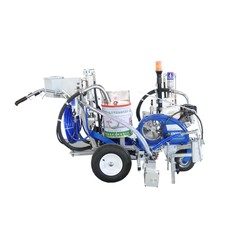
The company also supplies road marking machines and application equipment, allowing material and equipment specifications to be considered together where needed.
This does not mean that a contractor must replace its existing equipment. The first step is to understand the equipment already in use and evaluate whether the proposed material is suitable for that system.

Supporting Vietnam's Established Road Marking Businesses
For an importer with an existing distribution network, working with a manufacturer means evaluating more than an initial quotation.
The product must fit the specifications its customers use, remain consistent between orders and support the business's purchasing arrangements.
For a specialized contractor, the priority may be different: finding materials that match a project standard, work with available equipment and deliver predictable application performance.
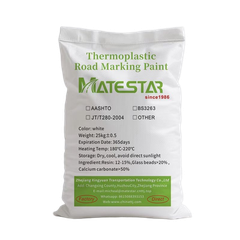
MATESTAR's manufacturing capabilities allow these requirements to be discussed before production, including customized formulations, standard 25 kg packaging, OEM options and bulk supply.
Its ongoing communication with Vietnamese buyers reflects this product-focused approach: reviewing specifications, discussing samples and considering how materials can be evaluated for local applications.
Vietnam's established road marking market provides experienced buyers with many factors to compare when selecting materials.
For importers, distributors and contractors evaluating thermoplastic road marking paint, the most productive conversation begins with the specifications and application requirements they already know-not a generic product catalogue.
MATESTAR welcomes technical discussions, sample evaluation and manufacturing cooperation with Vietnamese road marking businesses looking for suitable material options.