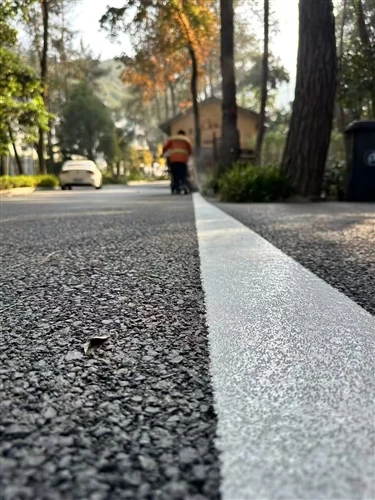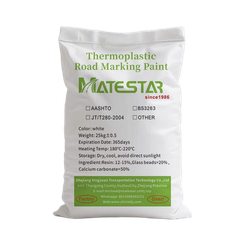
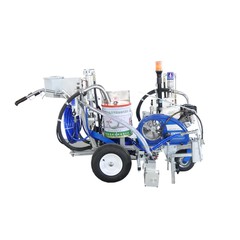
A common frustration in road maintenance is seeing fresh thermoplastic markings blister and bubble on brand-new asphalt. While many assume moisture is the culprit, the root cause lies deeper within the pavement's chemistry.
The Core Issue: Light Oil Volatilization
New asphalt contains significant amounts of residual light oils and volatile organic compounds. When hot thermoplastic paint is applied-typically at temperatures exceeding 200°C (392°F) -the intense heat causes these trapped oils to instantly vaporize. Because the fresh marking material acts as a temporary sealed barrier before it fully cures, the expanding gas has nowhere to escape. Pressure builds beneath the surface, resulting in unsightly bubbles and poor adhesion. Logically, the newer the pavement, the higher the oil content, and the more severe the bubbling issue.

Three Proven Solutions
Addressing this requires managing both the road's chemical state and application temperature:
Extend Pavement Curing Time: Allow new asphalt to off-gas naturally. A waiting period of 7–15 days (weather dependent) lets volatile oils evaporate before the seal coat of paint is applied.
Reduce Paint Temperature: Operate the thermoplastic kettle at the lower end of the manufacturer's recommended range (e.g., 180°C–190°C). Less thermal shock means less vaporization of underlying oils.
Pre-Treat the Surface: Prior to striping, use high-pressure air blowers or mechanical sweepers to remove loose surface oils and dust that could contribute to gas formation.
By adjusting the timing and heat management of the application, contractors can achieve a smooth, durable finish free of bubbles.