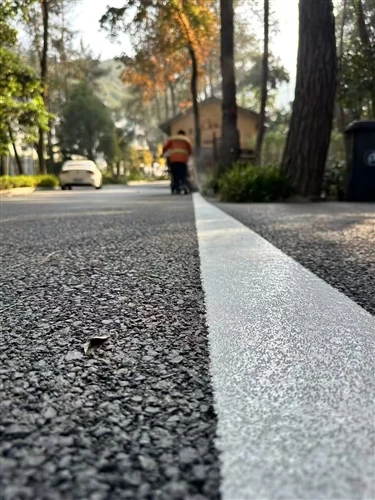
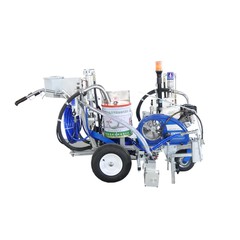
Contamination is one of the most common quality issues in the construction of solvent-based road marking paint, water-based road marking paint, and two-component road marking paint, affecting both appearance and the reflectivity and service life of markings.
Main causes vary depending on the paint system. For solvent-based road marking paint, slow drying due to improper thinner selection or excessive film thickness can make the wet film tacky, attracting dirt and tire rubber. Water-based road marking paint is particularly sensitive to high humidity and low temperatures, which delay curing and increase the risk of dust adhesion. In two-component road marking paint, incorrect hardener ratios or insufficient mixing may cause an uneven cure, leaving a sticky surface prone to contamination. Other common factors include excessive glass bead application, premature traffic opening, and residual dust and dirt on the road surface.
Targeted measures effectively prevent this problem:
- For solvent-based road marking paint, use asphalt-compatible thinners and strictly control film thickness to accelerate drying.
- For water-based road marking paint, schedule application when temperature is ≥10°C and humidity is below 80%, ensuring adequate air movement.
- For two-component road marking paint, add hardener precisely per manufacturer specifications and mix thoroughly before application.
- Adjust the glass bead dosage to ensure proper embedding without over-application.
- Open traffic only after the coating is fully dry and tack-free.
- Thoroughly clean the road surface before construction to remove dust and dirt, reducing contamination risks at the source.
By addressing these details, you can significantly improve the cleanliness and durability of all three types of road marking paints, ensuring clear and long-lasting traffic signs.