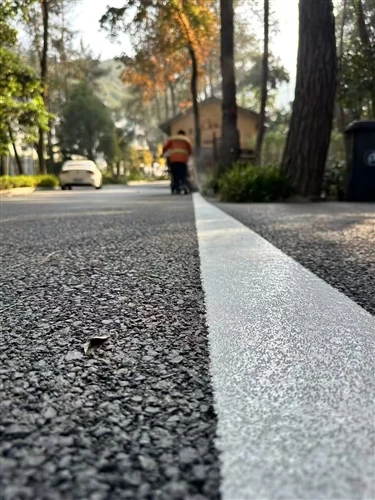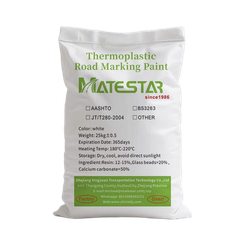
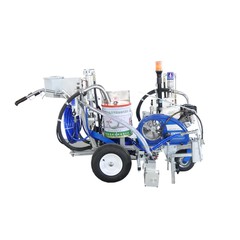

Thermoplastic road marking paint is used for road lines, highways, parking lots, pedestrian crossings, and other traffic safety markings.
But the performance of the paint does not depend only on raw materials. It also depends on whether the formula matches the real project conditions.
A good formula should meet the required standard. It should also match the climate, pavement type, traffic load, construction temperature, and expected service life.
In road marking projects, one fixed formula does not work for every market. A formula used in a hot country may not be suitable for a cold region. A formula for asphalt pavement may not perform the same way on cement concrete.
That is why formula design is important for thermoplastic road marking paint.
1. Temperature and Climate
Thermoplastic road marking paint is a hot-melt material. Temperature affects both application and final performance.
During application, temperature affects paint flow, drying speed, and adhesion to the road surface.
After the line is formed, temperature still affects stain resistance, glass bead bonding, compressive strength, and line stability.
So the formula should be adjusted for different seasons and climates.
Low-Temperature Conditions
In cold weather, thermoplastic paint becomes less fluid. It also dries and sets faster.
If the paint cures too quickly, it may not fully penetrate the small pores of the road surface. This can reduce adhesion.
For winter application, the formula should have better fluidity. This is usually done by increasing the plasticizer content.
This may lower the softening point and compressive strength. But it helps the paint wet the road surface better before curing. It also helps reduce cracking caused by low-temperature brittleness.
For cold regions, the formula should focus on:
- Better fluidity
- Better flexibility
- Stronger adhesion
- Lower cracking risk
High-Temperature Conditions
In summer, asphalt pavement can reach 60–70°C. In hot countries, this problem is even more common.
High pavement temperature can slow down the drying and setting of thermoplastic paint. If the line stays soft for too long, it may deform under wheel pressure.
High temperature can also cause plasticizers to move to the surface. This makes the line easier for dust and dirt to collect on. As a result, the reflectivity may drop faster.
For hot climates, the formula should use a higher softening point and less plasticizer.
Harder resin with a higher softening point is usually preferred. This helps the marking line dry faster, resist pressure, reduce rutting, and maintain better visibility.
For hot regions, highways, and heavy-traffic roads, high-softening-point thermoplastic road marking paint is usually more suitable.

Cement Concrete Pavement
Cement concrete is a rigid surface. Its temperature changes more slowly than asphalt.
On cement concrete, thermoplastic paint usually cures faster. But adhesion can be more difficult because the surface is hard and rigid.
For cement concrete pavement, the formula should be softer and more flexible. This helps the marking line bond better with the pavement and absorb stress caused by temperature changes.
If the formula is too hard, the line may lose adhesion more easily.
For cement concrete, formula design should focus on:
- Adhesion
- Flexibility
- Stress resistance
- Long-term bonding
Old Asphalt Pavement
Old asphalt is different from new asphalt. Its surface may become harder, aged, dusty, or slightly cracked.
In many cases, old asphalt behaves more like a rigid surface.
For old asphalt pavement, the formula can follow a similar direction to that of cement concrete pavement. The focus should be on adhesion and flexibility.
Before marking, the road surface should also be cleaned well. Dust, oil, moisture, and loose surface layers can reduce bonding strength.

3. Regional Conditions
Formula design should also consider regional conditions.
Different countries have different climates, traffic loads, pollution levels, sunlight intensity, road maintenance habits, and project standards.
These factors affect resin selection, additives, pigments, fillers, glass beads, and other raw materials.
Traffic Load
Heavy traffic causes faster wear. Trucks, buses, frequent braking, and repeated tire pressure can damage the marking line faster.
For highways, city main roads, ports, industrial areas, and heavy-duty roads, the formula should focus on:
- Wear resistance
- Compressive strength
- Line stability
- Glass bead retention
- Dust and Pollution
In dusty or polluted areas, the marking line gets dirty more easily.
This affects whiteness, visibility, and reflectivity.
For these areas, the formula should improve stain resistance and surface stability. The right resin and additives can help the line stay cleaner for longer.
Strong UV Exposure
In tropical regions, plateau areas, and places with strong sunlight, UV exposure can speed up aging.
This may affect color stability and surface condition.
For strong UV regions, the formula should focus on anti-aging performance and pigment weather resistance. This is especially important for white and yellow thermoplastic road marking paint used outdoors.

4. How to Choose the Right Formula
A good formula needs balance.
During construction, the paint should be easy to apply. It should flow well, bond well, and dry within the right time.
After application, the marking line should have good adhesion, wear resistance, reflectivity, visibility, and resistance to deformation or cracking.
Project ConditionFormula FocusCold weatherBetter fluidity and flexibilityHot climateHigher softening point and better pressure resistance New asphalt pavement Controlled flow and slightly higher softening point Cement concrete pavement Better adhesion and flexibility Old asphalt pavement Better bonding and surface adaptability Heavy traffic roads Better wear resistance and bead retention Dusty or polluted areas Better stain resistance Strong sunlight or UV Better anti-aging and color stability
Formula design should not only follow standards. It should also match the actual road condition.
Even when two projects follow the same standard, the formula may still need adjustment because of climate, pavement type, and traffic load.
5. MATESTAR Formula Support
MATESTAR does not recommend using one fixed formula for every export market.
Different countries and projects need different formula directions.
Hot-climate countries usually need a higher softening point and better compressive strength. Cold regions need better flexibility and lower cracking risk. Heavy-traffic roads need better wear resistance and stronger glass bead bonding. Cement concrete pavement needs better adhesion and flexibility.
For export projects, we can adjust the formula according to:
- Local climate
- Pavement type
- Traffic volume
- Road surface condition
- Required softening point
- Compressive strength
- Glass bead adhesion
- Reflectivity requirement
- White or yellow color
- Local or project standard
- Application thickness
- Construction method
We can also provide TDS, samples, customized packaging, and formula recommendations for bulk orders.
Conclusion
Thermoplastic road marking paint formula design is not a fixed recipe.
It needs to balance construction performance and long-term road performance.
Temperature, pavement type, traffic load, dust, pollution, UV exposure, and local standards all affect the final result.
For contractors, distributors, and project buyers, choosing the right formula is important. It helps improve durability, visibility, adhesion, and service life.
If you are preparing a road marking project, you can send us your country, pavement type, climate, required standard, application thickness, and estimated quantity. MATESTAR can help recommend a suitable thermoplastic road marking paint formula for your project.