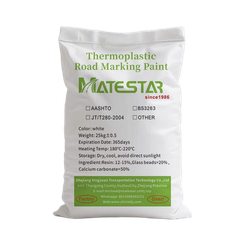
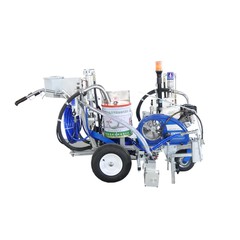
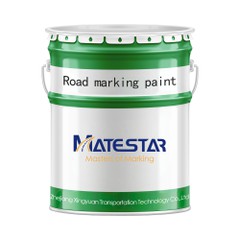
The equipment consists of components such as paint buckets, marking hoppers, and guide rods. The power system uses a 2.5HP-20HP engine or a battery pack with a runtime of over 7 hours. Hot-melt marking machines can improve the reflectivity of the markings by dynamically adjusting the paint melting state and the amount of glass beads applied. Some models are equipped with an automatic cleaning system and a reflective glass bead application device. Core technologies include a water-cooled diesel engine, multi-channel hydraulic control, and an overload overflow device. The standard configuration includes a handheld spray gun template operation function, and the marking width is adjustable (150mm basic specification).
In terms of application scenarios, road marking machines are widely used in urban roads, highways, airport runways, parking lots, factory workshops, and other places requiring traffic markings. It can not only draw basic markings such as straight lines, dashed lines, and arrows, but also customize various complex patterns and text to meet the traffic signage needs of different scenarios.
3D speed reduction markings: Use raised design to generate vibration alerts.
Colored bike lanes: Mineral pigments are added for long-lasting color.
Airport runway markings: Require special high-temperature resistant and impact-resistant coatings.
Nighttime reflective markings: 50% higher glass bead content for enhanced reflectivity.