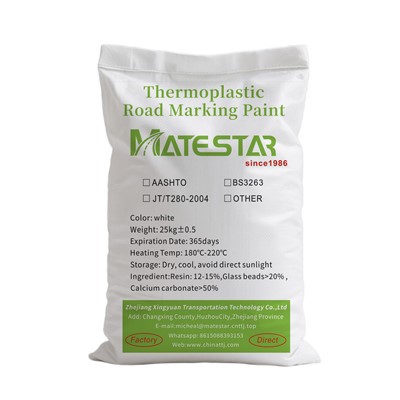
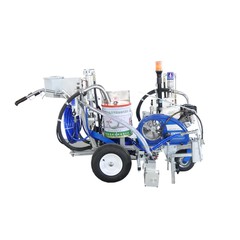
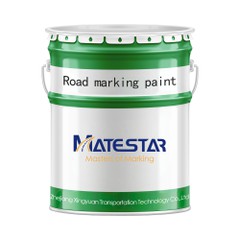
Road marking paint is a common marking material used on asphalt and cement pavements. It is composed of thermoplastic acrylic resin as a base, with added pigments, fillers, additives, and solvents.
Based on years of construction experience and experimental results, the scope of application for thermoplastic paint is summarized as follows: Suitable for center lines, lane dividers, edge lines, and guide lines where there is heavy vehicle traffic; pedestrian crossings, intersections, parking lots, and roads without nighttime lighting; in terms of adhesion, it performs best on asphalt pavements, followed by cement pavements; unsuitable for sandy pavements, brick pavements, temporary pavements, and pavements planned for expansion within six months.
Furthermore, with technological advancements, road marking paint is constantly innovating and developing. For example, some new paints incorporate reflective microbeads, improving nighttime driving safety; others have self-cleaning properties, reducing dust and dirt adhesion and maintaining the clarity of the markings.
When selecting road marking paint, in addition to considering its performance and quality, it is also necessary to choose according to the specific usage scenario and requirements. For example, on highways with high traffic volume, hot-melt coatings with strong wear resistance and good reflectivity should be selected; while in places such as residential areas or parking lots, cold-spray coatings may be more suitable.